_edited.jpg)
How Vertical AI Agents (Chatbots) Are Created: A Step-by-Step Guide


In today’s digital ecosystem, businesses are rapidly adopting AI-driven solutions to improve customer experience, automate operations, and increase conversions. One of the most impactful innovations in this space is the rise of vertical AI agents—commonly known as chatbots—designed for specific industries and use cases.
Unlike generic AI tools, vertical AI agents are built with focused knowledge, making them more accurate, efficient, and valuable for business applications. This article outlines the step-by-step process of creating a high-performing chatbot.
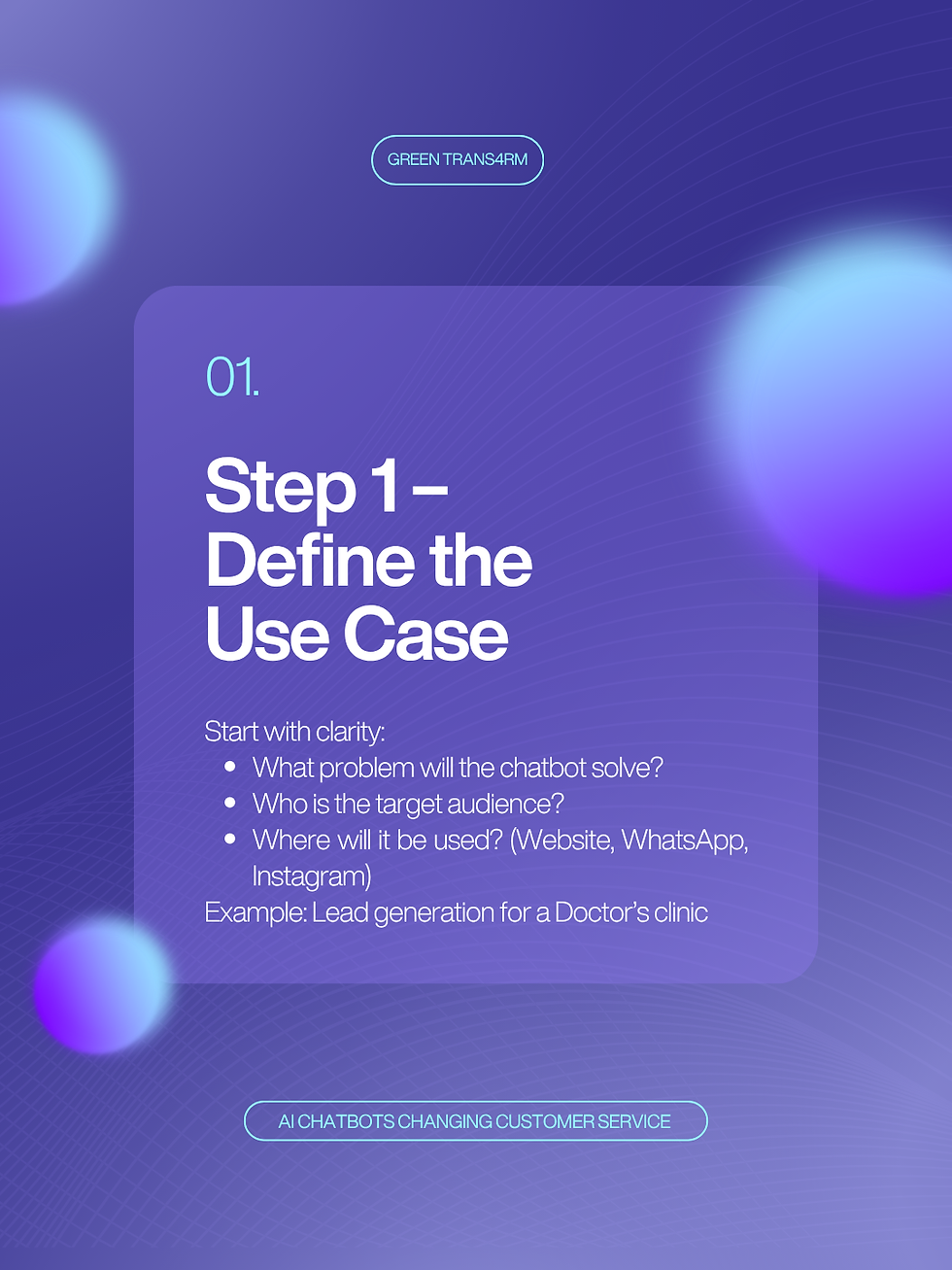
1. Define the Use Case
The foundation of any successful chatbot begins with clarity. Identify the core purpose of the chatbot:
What problem is it solving?
Who is the target audience?
Where will it be deployed (website, WhatsApp, social media)?
For example, a chatbot for a physiotherapy clinic may focus on lead generation, appointment booking, and answering common patient queries.

2. Collect and Structure Data
Data is the backbone of any AI system. Gather relevant information such as:
Frequently asked questions
Service or product details
Past customer interactions
This data should be structured into clear categories, intents, and responses. Well-organized data ensures that the chatbot can provide accurate and relevant answers.
3. Choose the Right AI Model or Platform
Selecting the right platform is a critical decision. Businesses can choose between:
Rule-based chatbots for simple, predefined interactions
AI-powered conversational bots for dynamic and human-like responses
Popular platforms include tools like ChatGPT APIs, Dialogflow, and ManyChat, depending on the complexity and scalability required.

4. Design the Conversation Flow
A well-designed conversation flow determines how users interact with the chatbot. This includes:
Greeting messages
Menu options
User pathways
Clear call-to-actions
The goal is to create a seamless, intuitive, and user-friendly experience that guides users toward desired outcomes.

5. Train the AI Agent
Training involves feeding the chatbot with sample conversations, keywords, and user intents. The system learns to understand different variations of queries and respond appropriately.
Continuous training improves accuracy and enhances the chatbot’s ability to handle real-world interactions.

6. Integrate with Platforms
Once developed, the chatbot must be integrated with relevant platforms such as:
Websites
WhatsApp
Facebook Messenger
CRM systems
Integration enables automated responses, lead capture, and streamlined communication across channels.

7. Test and Optimize
Before deployment, thorough testing is essential. Evaluate:
Response accuracy
Conversation flow
Edge cases and error handling
Post-launch, monitor performance metrics and continuously optimize the system to improve efficiency and user satisfaction.

8. Automate and Scale
After successful implementation, the chatbot can be enhanced with advanced capabilities such as:
Personalized responses
Automated lead nurturing sequences
Workflow automation
At this stage, the chatbot evolves into a 24/7 digital assistant that supports both sales and customer service functions.

Conclusion
Vertical AI agents are transforming how businesses interact with customers. By following a structured approach—from defining the use case to scaling automation—organizations can build powerful chatbot systems that drive engagement, efficiency, and growth.
As AI continues to evolve, the ability to design and deploy such systems is becoming an essential skill in digital marketing and business strategy.
If you are looking to build expertise in AI-powered digital marketing, now is the right time to start learning and implementing these technologies.


Comments